Alberto Santos-Dumont
1873–1932 · Brazilian
Aircraft design and piloting
WHY YOU SHOULD KNOW THEM
Flew the 14-bis in October 1906, among the first publicly witnessed heavier-than-air flights in Europe; pioneered the aileron
THEIR STORY
Alberto Santos-Dumont came from a wealthy Brazilian coffee-plantation family and moved to Paris as a young man, where he built a career designing and personally flying his own aircraft — first airships, then fixed-wing designs. Between the 1890s and 1900s, he designed and built thirteen powered airships, an extraordinary personal engineering output for the era. In 1901, he won the Deutsch Prize by flying his airship No. 6 around the Eiffel Tower and back within a strict time limit, a feat that made him a celebrity across France and Brazil alike. His most historically significant moment came on October 23, 1906, when he flew his 14-bis aircraft roughly 60 meters in front of witnesses — one of the first publicly documented heavier-than-air flights in Europe. He improved on that distance to 220 meters that November, a flight captured on film by the Pathé company, giving the world visual documentary evidence of powered flight at a time when the Wright Brothers' earlier flights in the United States were not yet widely known or verified in Europe. He continued innovating: his Demoiselle aircraft series, built between 1907 and 1909, is considered by many historians to be the first ultralight aircraft, and he pioneered the use of ailerons for aircraft roll control — a design feature still fundamental to how virtually every fixed-wing aircraft is controlled today. He made his final public flights in 1909. Santos-Dumont's later life was marked by declining health and, by several historical accounts, real distress at seeing aviation — the technology he had helped pioneer — turned toward military and wartime use. He died by suicide in 1932. He remains a national hero in Brazil, where his name is inscribed on the country's Pantheon of the Fatherland and Freedom, and many Brazilians consider him, not the Wright Brothers, the true father of aviation.
WHAT THEY ACTUALLY DID
Santos-Dumont personally designed, built, and test-flew his own aircraft — both airships and fixed-wing designs — developing real, lasting engineering innovations like the aileron rather than simply flying machines other people built.
WHAT YOU'RE LEARNING THAT CONNECTS
The aileron he pioneered is still the exact control surface students learn about when studying how an aircraft rolls and turns — a piece of his original design is on almost every aircraft flying today.
DID YOU KNOW?
He pioneered the aileron, the control surface still used for roll control on virtually every fixed-wing aircraft today.His name is inscribed on Brazil's Pantheon of the Fatherland and Freedom, and many Brazilians consider him aviation's true founder.
A NOTE ON HISTORICAL UNCERTAINTY
Santos-Dumont died by suicide in 1932, reportedly amid declining health and distress over aviation's use in warfare — this is stated here factually, as historians record it, not to sensationalize it.
SOURCES
Wikipedia
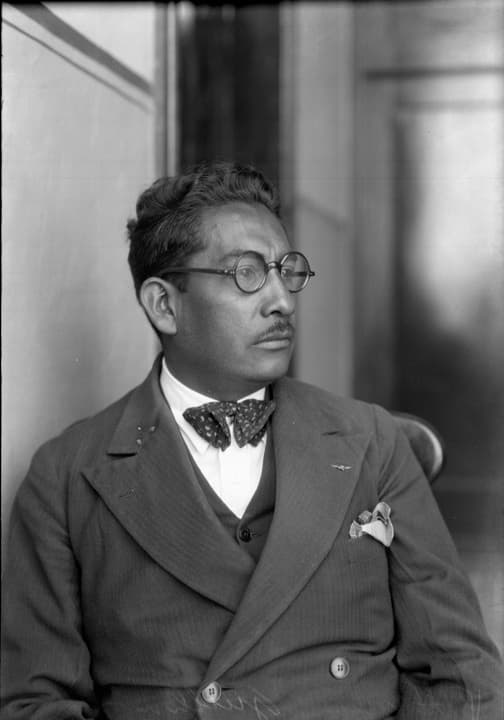
Photo: Zaida Ben-Yusuf / Adam Cuerden · Public domain · Source