Katya Echazarreta
b. 1995 · Mexican-American (born in Mexico)
Aerospace/electrical engineering and spaceflight
WHY YOU SHOULD KNOW THEM
First Mexican-born woman to fly to space (Blue Origin NS-21, June 4, 2022)
THEIR STORY
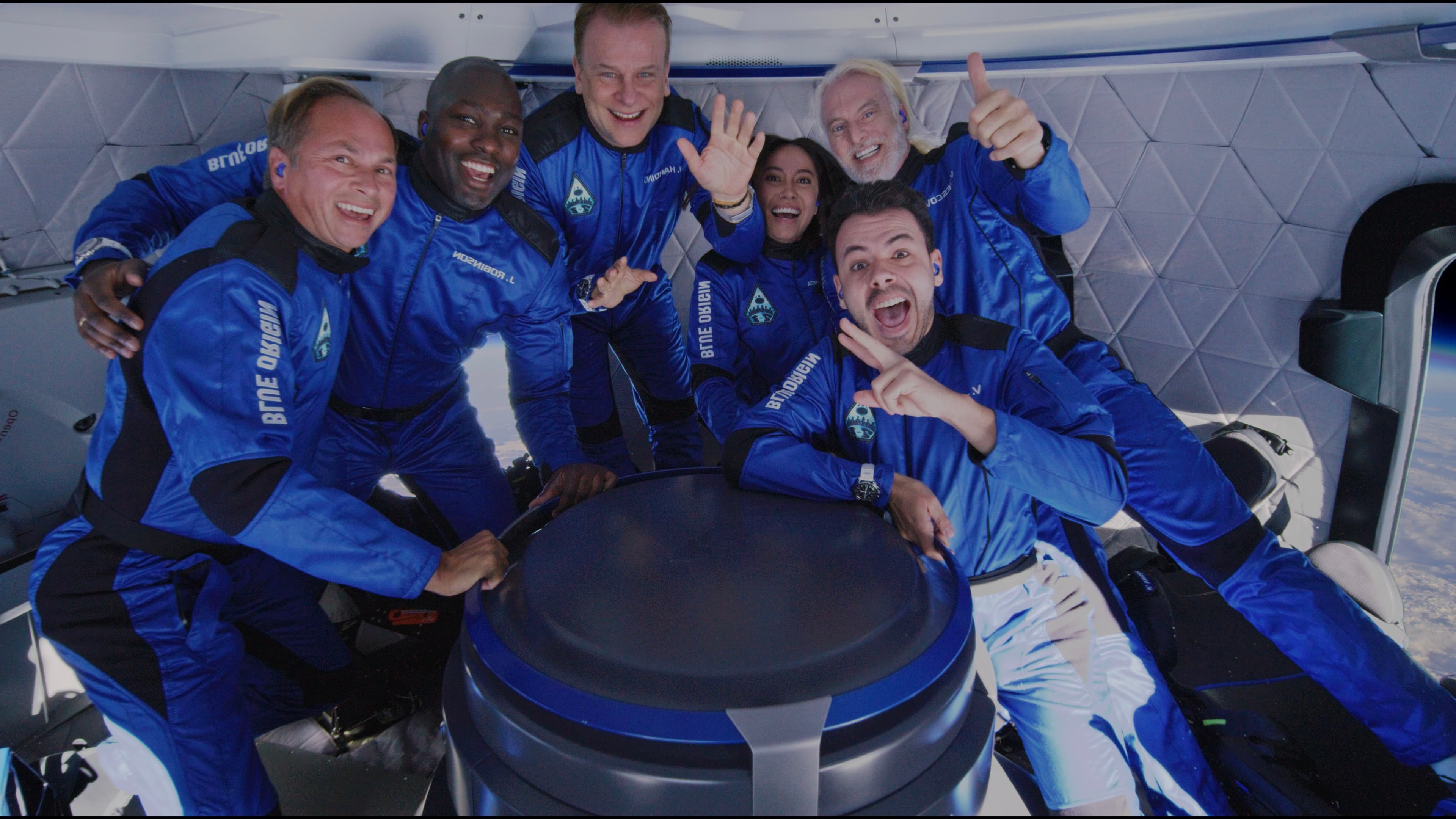
Katya Echazarreta was born in Guadalajara, Mexico, and moved to California with her family at age eight. She holds both Mexican and American citizenship, and her career has stayed closely tied to both countries — she has spoken about wanting Mexico specifically, not just herself individually, to have a stake in space exploration. She earned a bachelor's degree in electrical engineering from UCLA in 2019 and began a master's degree at Johns Hopkins University. While still a student, she interned at NASA's Jet Propulsion Laboratory starting in 2018, then joined JPL full-time as an engineer on the Europa Clipper mission's Ground Support Equipment team — real flight-hardware engineering work, not a ceremonial role. Over her time there she contributed to five separate NASA missions. In June 2022, Echazarreta flew aboard Blue Origin's NS-21 mission, a suborbital flight reaching roughly 107 kilometers in altitude — just past the internationally recognized boundary of space — for about ten minutes total. The flight made her the first Mexican-born woman ever to reach space, a milestone that resonated widely in Mexico specifically because she was one of their own, not just a Mexican-American success story viewed from a distance. Since that flight, Echazarreta has used her platform deliberately: she founded Fundación Espacial in 2023 to support STEM education for young people, addressed both chambers of Mexico's Congress about the importance of science education, and has been recognized publicly in both countries, including a Vogue México cover and a Glamour México Woman of the Year award. As she put it in a 2023 interview: "I want to return to space, but I want to go there with Mexico" — treating her own flight as a first step rather than a personal finish line.
WHAT THEY ACTUALLY DID
As a flight-hardware engineer on the Europa Clipper mission's ground support equipment team, Echazarreta worked on the real physical systems used to test and prepare spacecraft hardware before launch — engineering work that happened well before, and made possible, her own spaceflight.
WHAT YOU'RE LEARNING THAT CONNECTS
Her path — a real engineering degree, hands-on work on an actual NASA mission's flight hardware, then a spaceflight — is close to the most direct, current example this app can offer of where serious aerospace engineering study can actually lead.
DID YOU KNOW?
She worked as an engineer on NASA's Europa Clipper mission, which is on its way to study one of Jupiter's moons.Her Blue Origin flight reached about 107 kilometers in altitude — just past the internationally recognized 100-kilometer boundary of space.
SOURCES
Wikipedia, citing El Universal, Infobae, and El País reporting
Photo: Filipe Rabelo, via Wikimedia Commons · CC BY-SA 4.0 · Source