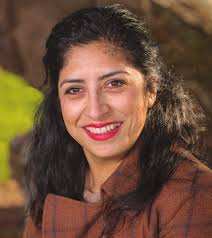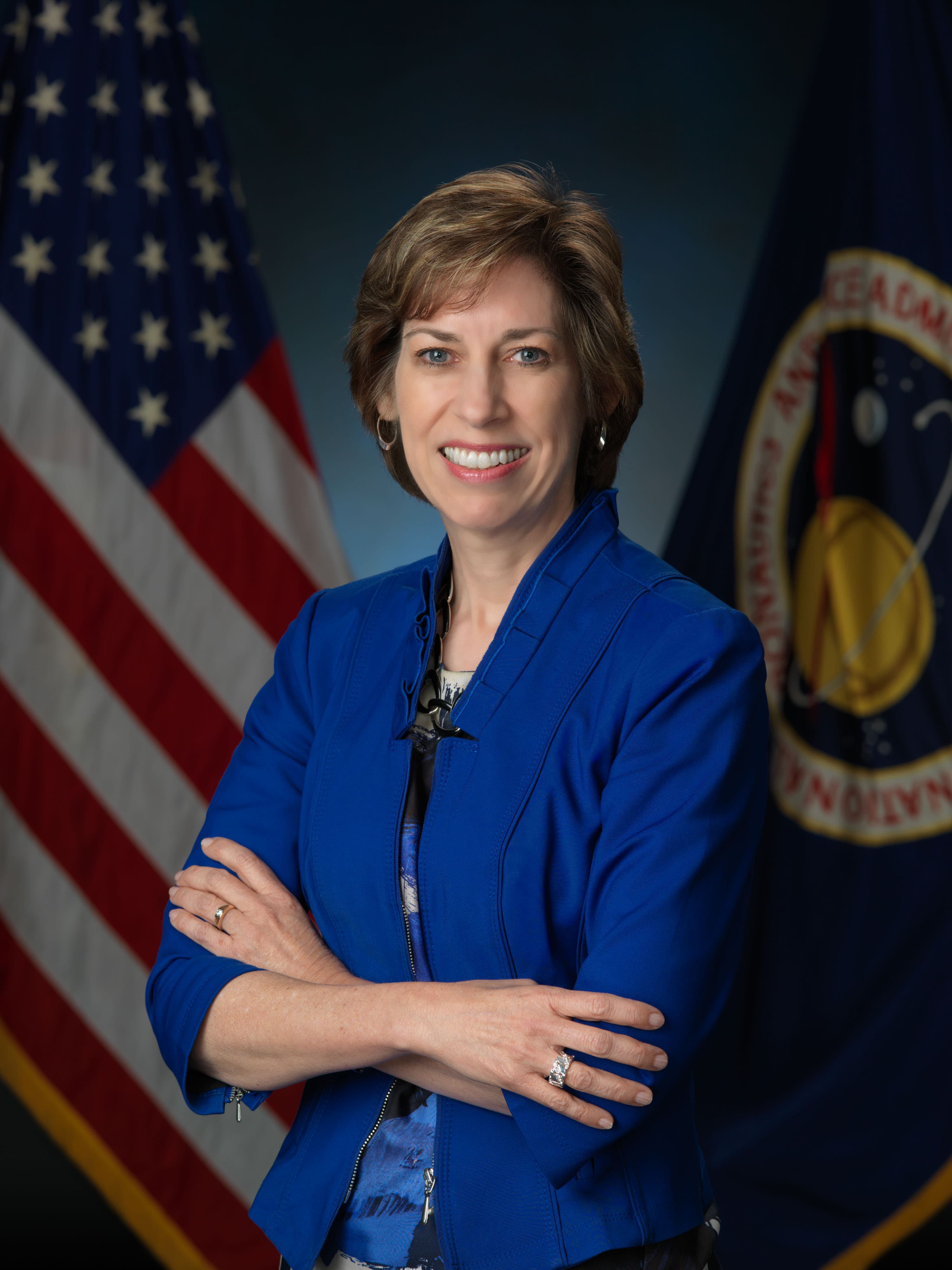
Ellen Ochoa
b. 1958 · American (Mexican-American heritage)
Aerospace engineering and spaceflight
WHY YOU SHOULD KNOW THEM
First Latina to fly in space (1993); later Director of NASA's Johnson Space Center
THEIR STORY
Ellen Ochoa was born in Los Angeles; her paternal grandparents had immigrated from Sonora, Mexico. She grew up in California and pursued physics and engineering at a time when women — and especially Latinas — were rare in those fields. She earned a physics degree from San Diego State University, graduating Phi Beta Kappa, then a master's and PhD in electrical engineering from Stanford University. Before she ever applied to NASA, Ochoa was already a working research engineer, developing optical systems for automated space exploration at Sandia National Laboratories and later NASA's Ames Research Center — work serious enough to earn her three patents. NASA selected her as an astronaut in January 1990, and in 1993 she flew aboard STS-56, a mission studying the Earth's ozone layer, becoming the first Latina ever to go to space. That was the first of four spaceflights. She served as Payload Commander on STS-66, then flew STS-96 in 1999 — the first mission to dock with the newly-launched International Space Station — and STS-110 in 2002, helping with ISS assembly work. Across her four missions she logged roughly 1,000 hours in space. She was also on the ground in Mission Control during one of NASA's darkest days, the 2003 Space Shuttle Columbia disaster, an experience that underscored how much real risk remains in human spaceflight even after decades of experience. Ochoa's career moved from flying to leading: she became Deputy Director of NASA's Johnson Space Center in 2007, then Director in 2013 — the first Hispanic person and only the second woman ever to hold that position, overseeing NASA's astronaut corps and mission control operations. She was inducted into the U.S. Astronaut Hall of Fame in 2017 and received the Presidential Medal of Freedom in 2024. Away from NASA, she's a classically trained flutist — she brought her flute into space with her — and co-authored a bilingual children's science book, *We Are All Scientists*, aimed at getting young readers, especially Latino children, to see themselves in STEM fields the way she once had to imagine for herself.
WHAT THEY ACTUALLY DID
As an optical systems engineer, Ochoa designed sensor and imaging technology that lets a spacecraft automatically detect and respond to its surroundings — real instrumentation engineering that came before, and directly enabled, her later career actually flying to space.
WHAT YOU'RE LEARNING THAT CONNECTS
Her original research — optical systems for automated space exploration — is aerospace engineering in its purest form: using sensors and instruments to let a spacecraft understand its environment, the same underlying idea behind the cockpit instruments and navigation systems covered elsewhere in this app, just applied far beyond the atmosphere.
DID YOU KNOW?
She holds three patents from her engineering research on optical systems, from before she ever became an astronaut.She's a classically trained flutist and brought her flute with her into space.She was the first Hispanic person to serve as Director of NASA's Johnson Space Center.
SOURCES
NASA official biography; Wikipedia, citing NASA press releases and university records
Photo: Bill Stafford · Public domain · Source