Fausto Vega Santander
1923–1945 · Mexican
Military aviation — fighter pilot
WHY YOU SHOULD KNOW THEM
Flew P-47D Thunderbolts with Escuadrón 201 during the liberation of Luzon, Philippines
THEIR STORY
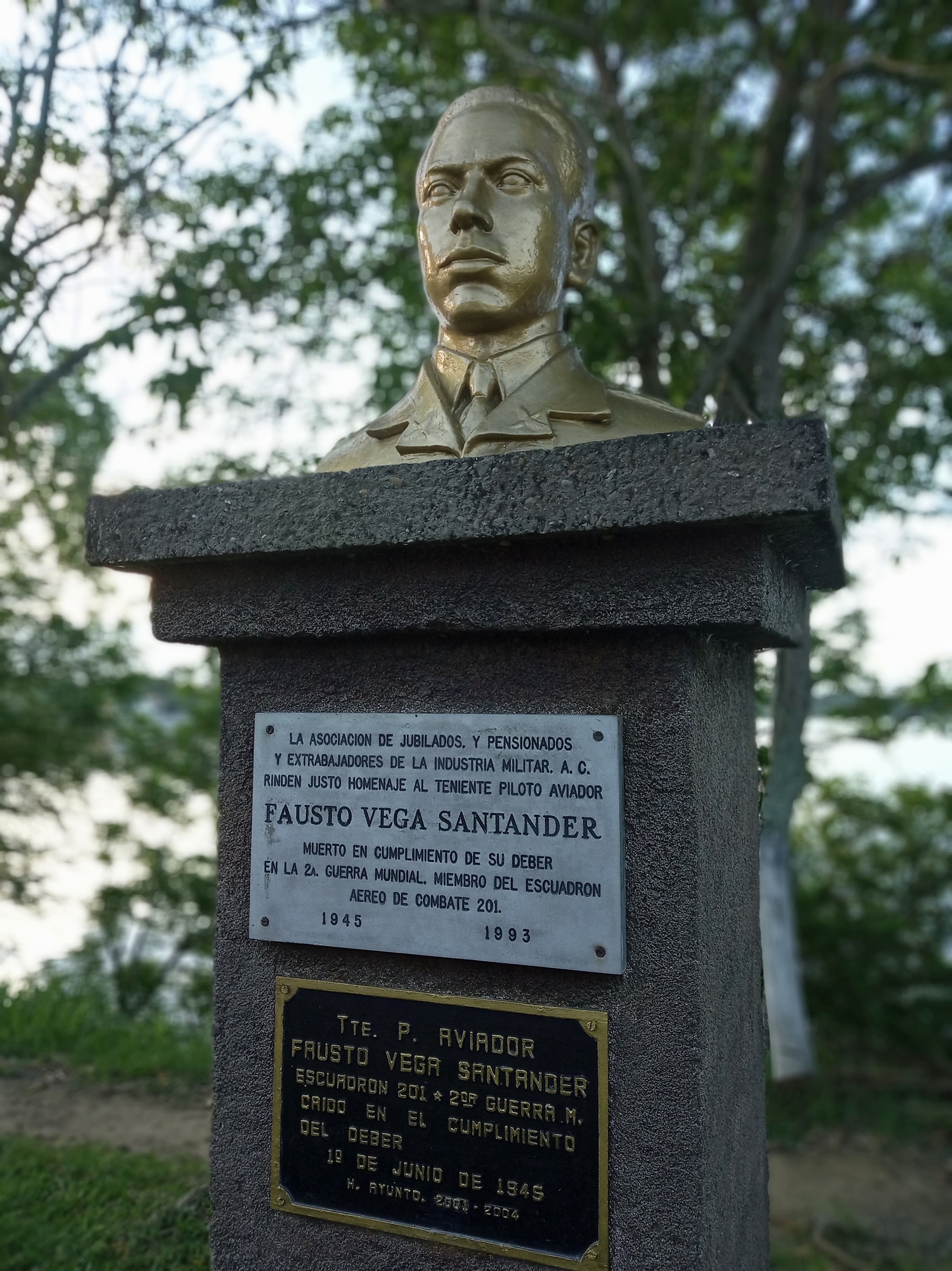
Fausto Vega Santander grew up in Tuxpan, Veracruz, attending the Escuela Enrique C. Rebsamen for his primary schooling. In 1940, after finishing high school, he joined the Mexican Air Force, graduating from the Military Aviation School as a sub-lieutenant. In 1944, before deploying overseas, he served as a special flight instructor at the aviation school in Guadalajara, passing on what he had learned to newer pilots. In March 1945, he deployed to the Philippines with Escuadrón 201, attached to the U.S. Army Air Forces' 58th Fighter Group during the campaign to liberate Luzon from Japanese occupation. Flying a P-47D Thunderbolt, he took part in the unit's combat operations in the final months of the Pacific war. He died on June 1, 1945, at only 21 years old — one of the youngest members of Escuadrón 201 to lose his life in the campaign. Exactly how he died is genuinely disputed by historians: some accounts describe him shot down by enemy anti-aircraft fire while dive-bombing a Japanese position near Subic Bay, while other sources describe a training accident in which his aircraft crashed into the sea at high speed near Tabones Island, with his body never recovered. Rather than resolve that disagreement, both versions of his final flight are worth knowing, since neither can be confirmed as more authoritative than the other from the available record. His hometown of Tuxpan has kept his memory alive in a way many of his squadron-mates have not received: the local airport is named in his honor, a monument was inaugurated there, and a local poet, Germán Muriel Azarria, wrote verses about him titled "Aguilucho caído" (Fallen Eaglet). He is also commemorated on the Escuadrón 201 memorial in Chapultepec Park in Mexico City.
WHAT THEY ACTUALLY DID
As a fighter-bomber pilot, his combat role involved dive-bombing — flying an aircraft in a steep, fast descent to drop ordnance precisely on a ground target, one of the most demanding and dangerous flying tasks of the era.
DID YOU KNOW?
A poet, Germán Muriel Azarria, wrote verses about him titled "Aguilucho caído" (Fallen Eaglet).His hometown airport in Tuxpan, Veracruz is named in his honor.
A NOTE ON HISTORICAL UNCERTAINTY
Sources disagree on the circumstances of his death: some describe him killed by enemy anti-aircraft fire during a dive-bombing mission against a Japanese position at Subic Bay, while English Wikipedia describes a dive-bombing training accident in which his aircraft crashed into the sea near Tabones Island. Both accounts are presented here rather than one being picked as definitive.
SOURCES
Wikipedia; SEDENA official biography; Expreso de Tuxpan
Photo: Julio Poisot De María (Wikimedia username: Oposit2001) · CC BY-SA 4.0 · Source