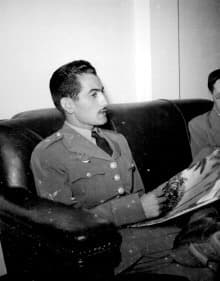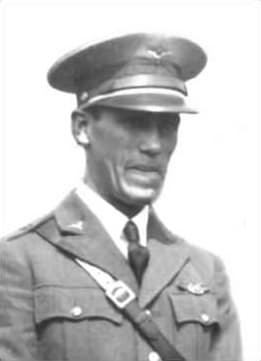
Emilio Carranza
1905–1928 · Mexican
Military aviation — long-distance goodwill flights
WHY YOU SHOULD KNOW THEM
Flew a nonstop Mexico City-to-Washington/New York goodwill flight in June 1928, mirroring Charles Lindbergh's 1927 visit to Mexico
THEIR STORY
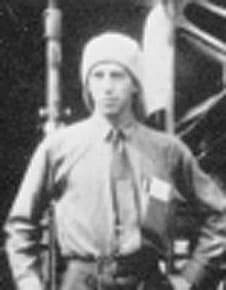
Emilio Carranza came from a family already connected to Mexican history and aviation: he was a great-nephew of former president Venustiano Carranza, and his uncle, Alberto Salinas Carranza, was a founding figure of the Mexican Air Force. His father worked as a Mexican consular official in New York, giving the young Carranza an early connection to the country where he would later become famous — and where he would die. Carranza graduated with honors from Mexico City's Military Academy in 1924, at around eighteen years old, having already seen combat as a teenager helping put down a rebellion in Sonora. He was commissioned as a Mexican Air Force lieutenant in January 1926 and quickly built a reputation as a serious long-distance pilot: in 1927 he flew nonstop from Mexico City to Ciudad Juárez, roughly 1,200 miles, and met Charles Lindbergh in person in El Paso afterward — the two aviators became genuine friends. In May 1928, Carranza flew solo nonstop from San Diego to Mexico City in about eighteen and a half hours, a flight so long it was reported as the third-longest nonstop solo flight in the world at the time. That performance earned him the assignment that would define his life: a goodwill flight from Mexico City to the United States, explicitly designed to return the favor of Lindbergh's own celebrated 1927 visit to Mexico City. Flying a Ryan Brougham named the *Mexico Excelsior* — the same model of aircraft as Lindbergh's *Spirit of St. Louis* — Carranza reached Washington, D.C. by June 12, 1928, where he had lunch with President Calvin Coolidge. In New York, he received the key to the city from the mayor, met celebrities including Charlie Chaplin and boxer Jack Dempsey, and reviewed cadets at West Point. It was treated as a full diplomatic tour, a young Mexican officer serving as a goodwill ambassador at a moment when U.S.–Mexico relations badly needed one. The return flight is where the story turns tragic. On July 12, 1928, Carranza took off from New York for home despite warnings from Lindbergh and other aviators about forecast storms along his route — he chose to fly anyway. Roughly eighty-five miles into the flight, over the Pine Barrens of New Jersey, his aircraft went down during a thunderstorm, apparently while he was attempting an emergency landing. He did not survive. His body was returned to Mexico with full military honors; reportedly more than 200,000 people lined the streets to see the procession, and he was buried in Mexico City's Rotonda de las Personas Ilustres and posthumously promoted to general. His memory endures on both sides of the border. A twelve-foot monument marks the crash site in New Jersey's Wharton State Forest, funded by donations collected from Mexican schoolchildren and dedicated in 1931; it's still the site of an annual memorial ceremony attended by American and Mexican officials. Mexico has issued commemorative postage stamps in his honor three times, and its military still awards an annual medal, the Presea Emilio Carranza, named for him.
WHAT THEY ACTUALLY DID
As a long-distance goodwill-flight pilot, Carranza had to plan an international flight route, manage fuel and weather across multiple countries, and make real go/no-go decisions under diplomatic pressure — the same flight-planning discipline every cross-country pilot studies today, with far higher stakes.
WHAT YOU'RE LEARNING THAT CONNECTS
Carranza was warned about the weather and chose to fly anyway. That single decision is exactly the kind of go/no-go judgment call that modern weather briefings, METAR reports, and flight planning exist to support — his story is a real, human reminder of why that discipline matters.
DID YOU KNOW?
The monument at his crash site in New Jersey was paid for by donations from Mexican schoolchildren.He and Charles Lindbergh were genuinely close friends — Lindbergh personally tried to talk him out of flying into the storm that killed him.
A NOTE ON HISTORICAL UNCERTAINTY
Sources give slightly different distances for his May 1928 San Diego-to-Mexico City flight (1,575 vs. 1,875 miles), and the exact cause of his fatal crash — whether a lightning strike or simply flying too low in severe weather — was never conclusively determined.
SOURCES
AOPA ("The Mexican Lindbergh"); San Diego Air & Space Museum; Wikipedia (EN/ES)
Photo: Subido por User:Tatehuari el 26 de Diciembre de 2006 · Public domain · Source