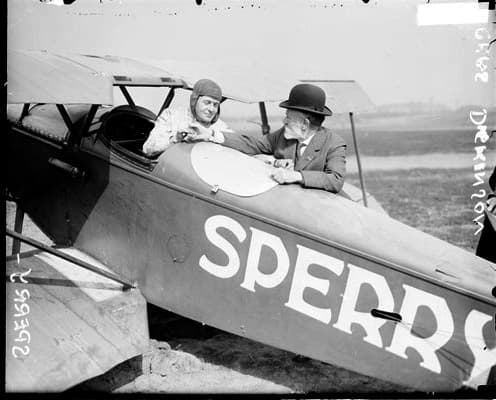
Lawrence Sperry
1892–1923 · American
Avionics — flight control systems
WHY YOU SHOULD KNOW THEM
Invented the first practical aircraft autopilot (1914) and the artificial horizon instrument
THEIR STORY
Lawrence Sperry was the son of Elmer Sperry, co-inventor of the gyrocompass — meaning he grew up immersed in exactly the kind of precision mechanical and gyroscopic engineering that would define his own career. He took his father's gyroscopic heading technology and applied it to a problem no one had yet solved: keeping an aircraft stable and on course without a pilot's constant hands-on control. In 1914, he connected a gyroscope to an aircraft's rudder and hydraulic elevators, creating the first practical autopilot. He proved it worked with a genuinely dramatic public demonstration, flying hands-off down the Seine River in France in front of onlookers who had never seen anything like it — an aircraft holding its own course and altitude with no one touching the controls. He went on to develop the artificial horizon as well, an instrument that shows a pilot their aircraft's orientation relative to the ground even with no visual reference outside the cockpit, which remains one of the most important instruments in any cockpit today. Over his career he held 23 patents related to aircraft safety and control systems. His life was cut short — he died in a flying accident in 1923, at just 31 years old — but the technology he invented became foundational to all of modern aviation. Every autopilot system flown today, and every artificial horizon in a modern glass cockpit, traces its lineage back to the systems he built.
WHAT THEY ACTUALLY DID
As an avionics inventor, Sperry connected mechanical gyroscopes to an aircraft's control surfaces, creating a system that could sense the aircraft's orientation and automatically correct it — the basic principle every autopilot and attitude indicator still uses today, just with electronics instead of his original mechanical gyroscopes.
WHAT YOU'RE LEARNING THAT CONNECTS
The artificial horizon he invented is one of the six instruments in the classic cockpit "six-pack" that every student pilot learns to read — a piece of technology from 1914 still sitting directly in front of pilots more than a century later.
DID YOU KNOW?
He proved his autopilot worked by publicly flying hands-off down the Seine River in France in 1914.He held 23 patents related to aircraft safety and control systems.
SOURCES
Wikipedia; HistoryNet; CNBC
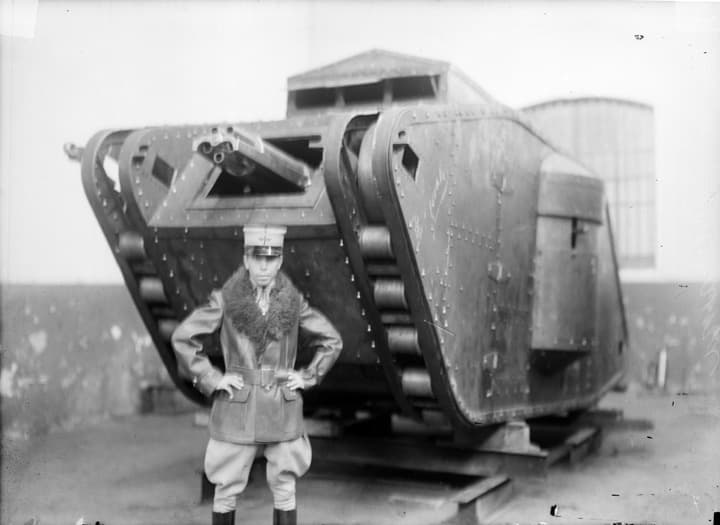
Photo: Chicago Daily News / Chicago History Museum · Public domain (published before 1931) · Source