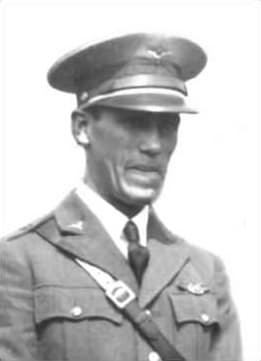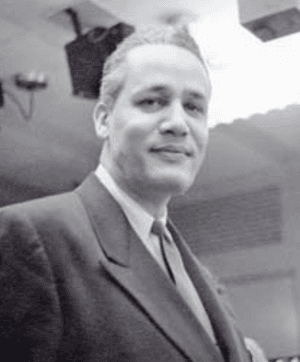
Oscar Holmes
1916–2001 · American
Air traffic control and naval aviation
WHY YOU SHOULD KNOW THEM
First African-American air traffic controller (1941); first African-American Naval Aviator (1943)
THEIR STORY
Oscar Holmes built an unusually credentialed early career for the era: a B.S. from West Virginia State College in 1936, a master's in chemistry from Ohio State in 1937, and work as a chemistry teacher and chemical analyst — years before aviation entered the picture at all. In 1941, through the Civilian Pilot Training Program, he earned a private pilot's license, and that same year applied to the Civil Aeronautics Administration to become an air traffic controller. Both his application and his acceptance were handled entirely by telegram. He was assigned to New York's traffic control center, becoming the first African-American air traffic controller in U.S. history. In 1942, despite having fewer flight hours than the Navy's official minimum requirement, he was accepted into Navy pilot training anyway. He was commissioned in September 1942, and in June 1943 became a Naval Aviator — the first African-American to do so. But recognition didn't come with equal treatment: rather than becoming a flight instructor like his white classmates, he was assigned a desk job interviewing cadets. A promotion he'd earned in 1943 was blocked by higher-ups, and he wasn't told the real reason for fifteen years — he only learned the truth in 1957. He did eventually fly operational missions, delivering T-6 Texan aircraft out of Dallas and Mare Island during the war. After the war, Holmes returned to air traffic control work at the New York center — the same job he'd broken the color barrier in years earlier — while attending law school at night. He passed the New York bar exam and earned both an LL.B. and LL.M. from Brooklyn Law School in the mid-1950s, all while continuing his federal ATC career, which lasted until his retirement in 1973.
WHAT THEY ACTUALLY DID
As an air traffic controller at a major traffic control center in the early 1940s, Holmes tracked and sequenced aircraft using pre-radar visual and radio procedures — real, safety-critical technical work, performed while simultaneously being the first Black person to hold that job in the country.
WHAT YOU'RE LEARNING THAT CONNECTS
His transition from pre-war visual/radio air traffic procedures to more advanced wartime and post-war methods tracks the same evolution of ATC technology and procedure that students studying airspace and communication systems learn about today.
DID YOU KNOW?
His 1941 air traffic controller application and acceptance were both handled entirely by telegram.He didn't learn the real reason his 1943 promotion had been blocked until 1957 — fourteen years later.
SOURCES
FAA official history ("Oscar Holmes: He Broke Three Color Barriers, but Few Knew"); Wikipedia; BlackPast.org
Photo: Unknown authorUnknown author · Public domain · Source