Putting It Together: Reading a Chart Excerpt
Uniéndolo todo: cómo leer un extracto de carta
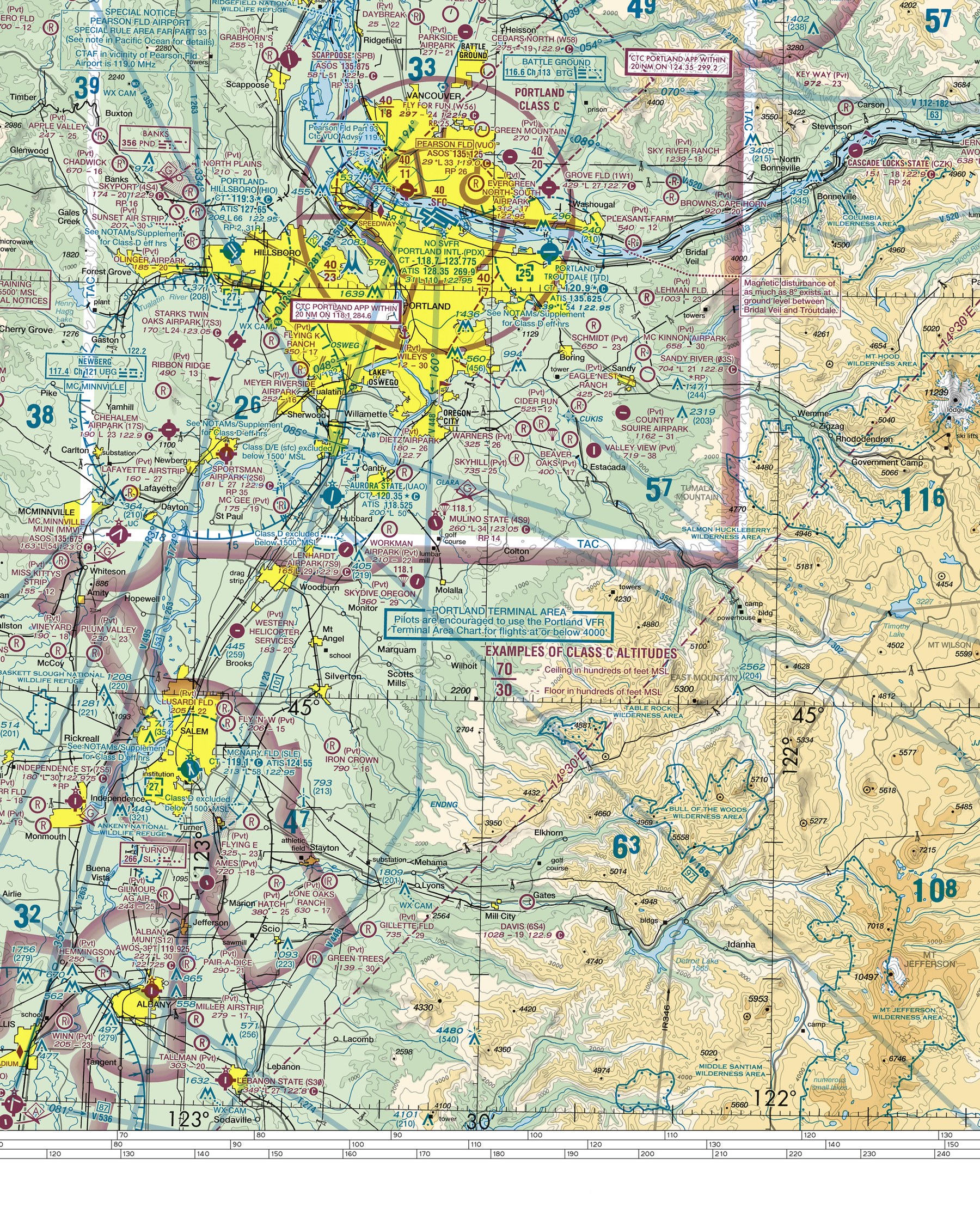
The complete Seattle sectional chart excerpt — every category of symbol, tap any of them.
El extracto completo de la carta seccional de Seattle — cada categoría de símbolo, toca cualquiera.
Combine airport, obstacle, terrain, airspace, and navigation aid symbol knowledge to reason through a complete, realistic (constructed-for-teaching) chart excerpt as a pilot would during flight planning.
A real sectional chart never presents its symbols one at a time the way this unit's lessons did — a pilot has to recognize and reason about airports, obstacles, airspace, and navaids all layered together on the same piece of paper, often while planning a route that touches several of them at once.
Teach It / Enséñalo
ENTIENDE
Esta lección trabaja a través de un extracto de carta construido y realista — deliberadamente creado con fines educativos en lugar de copiado de cualquier carta real publicada — que combina cada tipo de símbolo cubierto en esta unidad, exactamente de la manera en que una carta real los superpondría. El extracto descrito aquí incluye: un símbolo de aeropuerto azul con un bloque de datos que muestra una elevación de 850 pies y una longitud de pista de 62 (6,200 pies); un aeropuerto magenta no controlado a pocas millas de distancia; un límite de Clase D azul discontinuo alrededor del aeropuerto controlado; una rosa de los vientos VOR con su caja de frecuencia; un grupo de símbolos de obstáculos cerca de una línea de cresta; y sombreado de terreno que se oscurece notablemente hacia un borde del extracto. Leer este extracto de la manera en que realmente lo haría un piloto significa trabajarlo sistemáticamente: primero identificar cada aeropuerto y sus características básicas, luego trazar cada límite de espacio aéreo, luego localizar obstáculos y características del terreno, y finalmente notar las ayudas a la navegación disponibles.
¿Tiene sentido?
AVIATION WORDS · Palabras de aviación
DILO EN INGLÉS · SAY IT IN ENGLISH
“A real chart layers airports, airspace, obstacles, terrain, and navigation aids all together, and reading it well means checking each of those, in order, rather than randomly.”
Ejemplo guiado
Working through the excerpt systematically: the towered airport (blue, 850 ft elevation, 6,200 ft runway) sits inside Class D airspace — a pilot approaching it should expect to establish two-way radio contact before entering that dashed-blue boundary; the nearby non-towered magenta airport requires no such contact; the obstruction cluster near the ridge line demands a specific minimum altitude check using both its AGL figure and the area's MEF; and the VOR between the two airports offers a reliable navigation backup for the route connecting them.
Real Aviation Application / Aplicación real en aviación
This is, quite literally, how a real preflight chart review is done — a working pilot doesn't decode isolated symbols in a vacuum but scans an entire route's worth of chart, layer by layer, using this same systematic approach to build a complete picture before ever starting the engine.
Ask Your Teacher / Pregúntale a tu maestro
- Can we find and go through a real, current sectional chart excerpt together using this same systematic approach?
- Where can I get a real, free sectional chart to practice on outside of class?
- What's the very next chart-reading skill I should learn after this?
HAMPTON'S .02 CENTS
This capstone is the natural moment to transition students to a real, current sectional chart (free FAA digital charts are publicly available) for guided practice — the constructed excerpt in this lesson exists specifically to teach the systematic reading PROCESS safely and clearly; a real chart is where that process should be exercised next, with your guidance available for questions a first read might raise.
It Would Behoove You… Find a real, current sectional chart for an area you know well, and apply this lesson's systematic review process (airports, airspace, hazards, navaids) to it from start to finish.
Standards Alignment
CLASSROOM: Sectional Chart Reading — Applied Practice
FAA: FAA Aeronautical Chart User's Guide
CERTIFICATION: Private Pilot, Part 107
SOURCES: Aeronautical Chart User's Guide